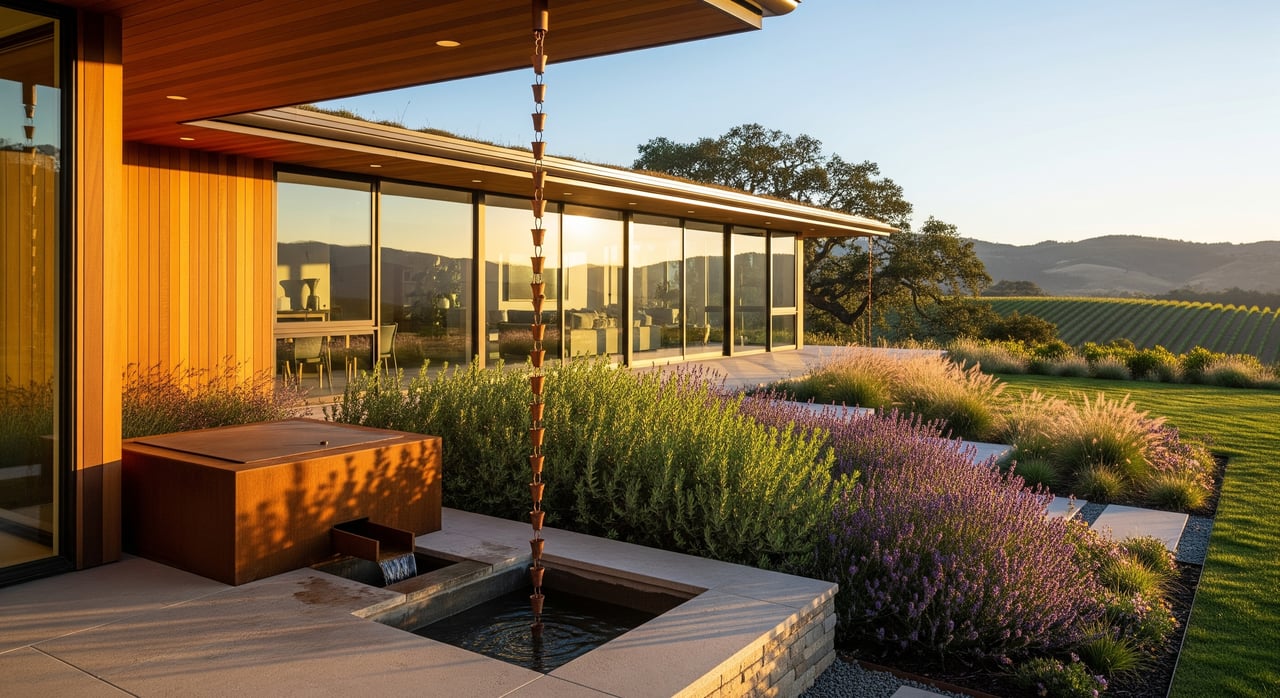
Wondering how to cut outdoor water use without sacrificing a healthy landscape? In Windsor’s dry summers, graywater and rainwater can make a real difference in your yard and on your water bill. If you are curious about where to start, what systems work here, and how to navigate permits and rebates, you are in the right place. This guide walks you through practical options, local contacts, typical costs, and the steps to move forward with confidence. Let’s dive in.
Why it matters in Windsor
Windsor sits in a Mediterranean climate with wet winters and long, dry summers. Outdoor irrigation often drives up residential water use in the hottest months. Using laundry water for subsurface irrigation and capturing roof runoff can lower potable use and add drought resilience.
Most Windsor landscapes include trees, shrubs, and turf that can thrive with graywater or stored rainwater when used correctly. You will still need to follow local planning and building codes, so confirm rules before you start.
Your best-fit system options
Laundry-to-Landscape (L2L)
L2L systems divert your washing machine discharge to a subsurface irrigation line or mulch basin. A typical setup includes a diverter valve, hose or piping, a lint trap or simple filter, and distribution lines that deliver water below the surface.
L2L works well for nonedible plants, trees, and shrubs. Avoid direct application to edible portions of food crops. For plant health, choose detergents that are low in sodium and boron. Many homeowners install a preassembled kit or hire a plumber or irrigation contractor. Local code may require a permit or inspection depending on the scope.
Pros include low cost, quick water savings for irrigation, and straightforward maintenance. Consider limits such as possible salt buildup, odor if not maintained, and variable output if your laundry volume is low.
Rainwater harvesting
Rainwater systems capture roof runoff in barrels or cisterns for later use in the garden. Components usually include gutters and downspouts, a debris screen and first-flush diverter, a storage tank or barrel, and a pump if you need pressure for irrigation.
In Windsor, most rainfall arrives in winter, so many homeowners size tanks to catch seasonal storms. Installation ranges from simple, DIY barrels to professionally installed above- or belowground cisterns with pumps and controls. Larger tanks and any systems with electrical connections can trigger permits.
Rainwater is well suited for landscaping and can also help with stormwater management on your property. Systems require mosquito control and routine maintenance. Larger cisterns and pumps increase costs.
Combine both approaches
Many Windsor homeowners use L2L for year-round supplemental watering and add a cistern for seasonal storage. Rainwater can handle fall through spring, while L2L supports trees and ornamentals when rainfall drops off. If you combine systems, coordinate with local plumbing and backflow requirements.
Start here: local contacts and resources
- Town of Windsor Planning/Building. For permit needs, code interpretation, and whether a plan check is required, begin with the Building or Planning pages on the Town of Windsor website.
- Sonoma Water. For regional conservation programs, rebates, and technical resources, check Sonoma Water.
- Sonoma County PRMD. If your property is in unincorporated Sonoma County or near septic systems, review requirements with the Permit & Resource Management Department.
- California DWR. For statewide funding and guidance on rainwater and groundwater resilience, visit the California Department of Water Resources.
- State Water Resources Control Board. For water quality and graywater policy, see the State Water Board.
- Greywater Action. For practical guidance on L2L design and best practices, explore Greywater Action.
Program names, rebate eligibility, and requirements change. Use these homepages as starting points and confirm details with staff.
Permits and health basics to verify
- Plumbing and building permits. Work that modifies indoor plumbing, connects to irrigation lines, installs tanks above certain sizes, or adds pumps and electrical wiring may require permits. Confirm requirements with the Town of Windsor or Sonoma County PRMD if you are in unincorporated areas.
- Setbacks and septic systems. If you have a septic system, verify setbacks and infiltration rules with PRMD before you dig.
- Health safeguards. Apply graywater below the surface and avoid contact with edible portions of crops. Choose biodegradable, low-sodium detergents and plan for seasonal bypass during heavy rains. For rainwater systems, keep tanks covered, screen inlets, and secure overflow to prevent standing water and mosquito issues.
What to expect from a site visit
Site visits are commonly offered by licensed plumbers, irrigation contractors, certified rainwater installers, or conservation program staff. A typical visit includes:
- Reviewing your roof and downspouts for rain capture.
- Checking laundry location, plumbing route, irrigation layout, and target plants for L2L.
- Identifying storage options, tank sizes, and any pump or electrical needs.
- Assessing soil drainage, property setbacks, and any code or permitting issues.
- Providing an approach, materials list, rough costs, estimated water savings, and a maintenance plan.
Smart questions to ask:
- Do you have local experience and references, and are you licensed and insured for the work involved?
- Will this project require permits, inspections, or a final signoff from the Town or County?
- Can the system integrate with my existing drip or controller?
- What ongoing maintenance do you recommend, and how often?
Costs and performance at a glance
- L2L kits. Materials for a small system can be under a few hundred dollars. Professional installation typically ranges from hundreds to low thousands depending on complexity.
- Rain barrels. Basic barrels often run $50 to $300 each. You can connect several to increase storage.
- Small above-ground cisterns with pumps. Many residential projects fall in the range of a few thousand dollars up to $10,000 or more, depending on tank size, controls, and any electrical or excavation work.
- Larger buried cisterns. Complex systems often range from $10,000 to $30,000 or more.
Savings depend on your site. L2L savings scale with laundry volume and landscape demand. For rain capture, a single inch of rain on a 1,000 square foot roof can yield about 623 gallons of water. Ask your installer to estimate savings based on your roof area, storage, and irrigation needs.
Rebates and how to check
Windsor and Sonoma County periodically offer rebates for rain barrels, cisterns, smart controllers, turf replacement, and related upgrades. Availability and amounts change.
- Start with Sonoma Water to find conservation programs and any current residential rebates.
- Check the Town of Windsor website for local water conservation offerings.
- For potential state-funded programs or regional grants, visit the California Department of Water Resources and the State Water Board.
If a rebate requires pre-approval, secure it before you begin work, and keep all invoices for your application.
Step-by-step: your Windsor action plan
- Review local guidance. Visit the Town of Windsor Building and Planning pages to understand permit triggers for graywater and rain systems.
- Check regional programs. Explore Sonoma Water for current rebates, technical guidance, and workshops.
- Schedule site visits. Request quotes from two or three licensed local contractors experienced with graywater and rainwater systems. Ask for Sonoma County references.
- Confirm permits. Verify permit needs with the Town or PRMD before installation and electrical work.
- Apply for rebates. If available, obtain pre-approval and track receipts throughout the project.
- Plan maintenance. Set a simple schedule and select landscape plants that are appropriate for graywater, such as trees and many ornamentals.
Simple maintenance checklist
Laundry-to-Landscape
- Inspect and clean lint traps and filters monthly at first, then adjust as needed.
- Watch for plant stress or salt buildup, and flush lines if recommended.
- Divert graywater during heavy rain or if freezing conditions are a concern.
Rainwater systems
- Clean gutters and debris screens annually or after major storms.
- Inspect inlets, overflows, and first-flush devices for proper operation.
- Maintain pumps and controls per manufacturer guidance.
- Check for leaks, ensure mosquito screens are intact, and keep lids secure.
Ready to explore a water-smart move?
Whether you are preparing to sell or planning a purchase in Windsor, it helps to understand how graywater and rainwater features fit into your home’s upkeep and curb appeal. If you want local guidance, introductions to reputable contractors, or a plan that aligns with your real estate goals, reach out to Miranda Hanson. Let’s Connect.
FAQs
Do I need a permit for a laundry-to-landscape system in Windsor?
- It depends on the scope. Plumbing changes, new piping, or tanks can require permits. Confirm requirements with the Town of Windsor or Sonoma County PRMD if you are in an unincorporated area.
Can I use graywater on my edible garden in Windsor?
- Best practice is to avoid applying untreated graywater to edible portions of crops. Graywater is commonly used for ornamentals, trees, and subsurface irrigation. Follow state and local guidance and choose safer detergents.
Will a rainwater cistern with a pump need an electrical permit?
- If your system includes a pump and electrical wiring, an electrical permit and inspection are often required. Confirm with the Town or County before installation.
How big should my rainwater cistern be in Windsor’s climate?
- Sizing depends on your roof area, storage space, irrigation needs, and budget. Many residents size tanks to capture winter storms. Ask your installer to estimate capacity and seasonal performance.
Who can perform a site visit for graywater or rainwater systems?
- Licensed plumbers, irrigation contractors, and certified rainwater installers commonly conduct site visits. Some conservation programs may offer assessments. Ask about licenses, insurance, and local references.
Are there rebates for rain barrels or cisterns in Windsor?
- Programs change. Check Sonoma Water and the Town of Windsor website for current offerings, eligibility, and timelines.